Tag Archives: novel

6 Types of People You’ll See on Facebook

I work in marketing, where part of my job is to segment our customers. I started thinking of the types of Facebook users we run across and came up with this list of hilarious characters (excluding the common Troll since everyone knows and hates them).

Do any of these people remind you of your friends?

THE BELIEVER
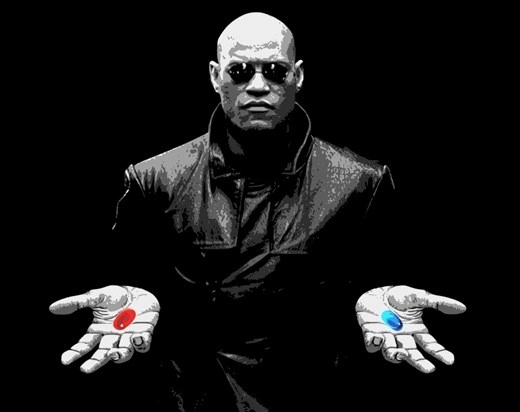
Morpheus

  • In The Matrix, taking the Blue Pill symbolized believing in what one wanted to believe. That is your typical Believer, who accepts everything on the internet as the truth. This person sees satire articles (with headlines like Obama Declares Guns and Jesus Illegal in Texas” or “LeBron James supports Donald Sterling: Wants no Black Fans at Heat games”) and will believe them 100%. With no thought of fact-checking, he forwards the articles to everyone, getting them riled up and ready for war. Soon, everyone is forwarding these articles, all because one person was too lazy to read the fine print. And that article will circulate and spread bad info for the next hundred years.
  • Likes: To appear knowledgeable. To be the first one to spark heated emotions.
  • Dislikes: Feeling dumb after seeing proof that they fell for an obviously fake article.


THE NARCISSIST
Luv me

  • These self-lovers take selfies every five minutes. Their photo albums are made up of hundreds of pictures. Correction: hundreds of the same pictures. With the same poses. In the same places. Would it hurt for them to change one up once in a while?
  • Some of the biggest offenders are men who constantly post shirtless photos of themselves. And what’s up with these guys who send unsolicited pics of their privates to ladies? Do they think a woman has never seen one before?
  • Likes: Plenty of ‘likes’ and compliments.
  • Dislikes: Receiving no ‘likes’ or comments.


THE CATFISHER
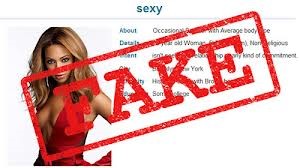
  • These people create fake profiles and ask you to friend them. They want to troll you or get you to send money. These profiles always show a gorgeous woman who writes in poor English with no punctuation, asking for a friend.
  • Who on earth still believes a woman looking like Beyonce or Jessica Alba needs to resort to making random friend requests online to meet guys? Please. They certainly wouldn’t be coming after a regular dude like me. These Catfishers (who are probably dudes anyway) should be thrown in jail. Let them make some new friends there.
  • Likes: Money. Credit card info. Gullible men.
  • Dislikes: Truth and honesty. Facebook administrators. The police.


THE BLUSTERER

  • In the movie Training Day, Denzel’s character (Alonzo Harris) goes ballistic on a group of residents, promising them that they’ll be playing basketball in Pelican Bay prison and screaming ‘King Kong ain’t got @$%!^ on me’. That reminds me of the classic Facebook Blusterer.
  • When Blusterers feel someone has disrespected them, they don’t simply vent. They explode. They post a vague stream of profanities against the offenders, which goes something like this: “To the person who did what you did, you know who you are and you know what you did. Don’t you EVER mess with me! I’m not the one! Test me! I don’t play!”
  • So why are they called ‘Blusterers’? Because it’s mostly hot air. They never actually name or tag the offender in the post. Unless he has telepathic powers, there’s no guarantee he’ll even see the post, much less respond to it. Serious people don’t make vague Facebook posts that may never be read. They go to the offender’s house, beat the crap out of him, and then post about it as a warning to others. But a Blusterer makes these vague posts almost every week.
  • Likes: Receiving attention. Creating drama. Feeling tough.
  • Dislikes: Being ignored. Receiving feedback that they may be part of the problem.


THE REPORTER

Reporter

  • If you plan to DVR a popular show like Game of Thrones, 24, or Scandal, then don’t look at your phone when the show is on. At least, not if you don’t want to spoil the surprise when you finally watch it. Why? Because Reporters are the folks who provide real-time, play-by-play developments of the show for the entire hour. Admittedly, I’m one of them. If 24 is on, or my Ravens are in a playoff game, I’m posting about every development or every completed pass (to all my friends, I’m sorry. I will try to do better this season).
  • Likes: To feel like part of the crowd. To be the first one to spread unimportant news. To live vicariously through sports teams.
  • Dislikes: Posting updates too late. Realizing that no one cares.


THE SELF-PROCLAIMED EXPERT
Bad Advice

  • These are those people who create those memes or videos full of seemingly profound nuggets of wisdom—until you actually think about what you’re reading. Some of them have great advice, but many of them are simply unintelligible rants of one person’s opinion. Most of these people have no credentials, but it doesn’t matter. It could be the stupidest advice ever, but if it’s written inside a beautiful meme, it might as well be biblical because people will accept it with no questions. Give someone a cell phone and internet connection, and they’re an expert on nuclear physics or relationships.
  • Actually, I’m just being a hater because they’re smarter than I am. Some of these people have thousands of followers. Me? Uh, not so much. I need to take a page from their book and start filming videos from the driver’s seat of my car so I look credible.
  • Likes: A large number of followers. Mass sharing of messages.
  • Dislikes: Requests to see credentials. Someone calling BS on their posts.


The bottom line is that we all exhibit these behaviors at some point, although some people seem to do so all the time. Nevertheless, I love seeing them. It’s what makes Facebook fun (for me at least).

Any other personalities I missed?

Always Misunderstood — the Life of an Introvert

Thinker

I’m an introvert. This is probably why I enjoy writing. Only someone comfortable with being alone can spend hours brainstorming, researching, and drawing up plots and sub-plots for crime fiction novels—while not becoming mentally exhausted. Unfortunately, being an introvert also means being misunderstood all the time.

If you’re an introvert, then you already know about being misunderstood. Being misunderstood is a way of life for us. We’re accused of being stuck up, aloof, or unfriendly. Usually, we’re just the opposite.

Everybody understands extroverts. Just get them around people, invite them to parties, and let them talk about themselves. They’ll be happy. In our society, extroversion is the preferred trait.

Introverts are constantly encouraged to be extroverted. We’re prodded to mix and mingle, to smile and be engaging, and to get out there and dance all night long. We’re urged to show we’re not wallflowers and that we can enjoy life as those normal, outgoing people do. And I guarantee every introvert has heard this at almost every party—“What? You’re leaving already? You just got here! Can’t hang?” It could be 3am and we’ll have been at that party for hours. But we’ll still hear that mess and be labeled party-poopers. Sometimes, it makes me want to channel my inner Samuel L. Jackson, but I refrain. After all, I don’t want to end up on Do-Not-Invite lists.

n2N9HFe

For years, I felt like something was wrong with me as I struggled to fit into a constantly outgoing lifestyle—until I realized that the difference between an introvert and an extrovert is simply how we get our energy. Introverts are givers of energy. Being around people drains us, so we recharge by being alone. Extroverts recharge by being around people. One could say that they are like vampires, sucking energy from others. That’s why introverts can only stay at parties for so long. Being drained all night by other people leaves us depleted.

Lots of people don’t understand this simple difference, which is why we’re always misunderstood. So if you’re an extrovert, let’s clear up some misconceptions you may have about us weird introverts:

We do like people

  • We just don’t like being around them 24/7. We need breaks once in a while.

When we want to be alone, that’s usually all it means

  • Just because we want to be alone doesn’t mean we’re upset with you. We just need to recharge our batteries. Especially when we come home after work. We’ve been getting drained all day.

We aren’t shy or timid

  • We have no problem telling you what we think. Especially if some of you hardcore extroverts can stop talking long enough to let us get a word in.

We aren’t boring

  • We like skiing, zip-lining, scuba-diving, and other fun things. We even like parties. But when it’s after 2am and we’ve been at it for hours, we’re going to ignore your pleas to check out that other party on the opposite side of the city just to see if it’s still ‘jumping’. We’ve got a home to get to.

We aren’t arrogant or stuck-up

  • Chances are, when you meet someone acting standoff-ish, the person probably isn’t intending to appear that way. He’s just in his own world.
  • I’m accused of being arrogant all the time because I may not greet people when we approach. It’s not intentional. Usually, I’m deep in thought about something. I may be preoccupied with a situation on the job. I may have spotted some weird-looking dude nearby and I’m wondering how to incorporate his traits into a character in my novel. I may not even notice someone trying to get my attention, and if I do, I may not remember to smile and say hello (yes, I actually have to tell myself to do those things when meeting strangers because it doesn’t come naturally to me). But if I’m aware of my behavior and concentrate on being sociable, I can be as engaging as anyone. Just don’t expect me to do it for long. I only have so much energy to give.

Of course, I envy extroverts at times. While I can easily isolate myself and write for hours, I wish I could sustain that energy level when promoting my book. Meeting strangers and striking up conversations is taxing. For example, I can go to a book festival and work the crowd for about four hours, max. I’ll have fun doing it, but I’ll be so drained that I’ll need to be alone the rest of the afternoon to recover.

I’ve gotten better at managing my energy levels, though. If you’re an introvert who needs to mix and mingle with the crowd (particularly you writers who hate promoting your books), make sure you have plenty of personal time beforehand and consider gulping an energy drink (5-hour-Energy, coffee) or eating whole fruit a couple of hours into your social events. It will give you enough energy to share with others for at least a few hours. That way, you’ll avoid having to recharge by retreating into your personal shell and being misunderstood by everyone you meet.

For you fellow introverts out there, what are some ways you prepare for your big social events?

I’ve got 99 problems…and book publicity is one of them

Being a writer is rewarding, exhausting, and sobering. Particularly if you’ve recently published your first book and are trying to make a name for yourself. That means you get to experience the wonderful world of book promotion. You get to try a million suggestions (which everyone will have) to find those fleeting moments of joy when you get a positive review or sell a book. You get to learn what works and what doesn’t. And as I go through these growing pains, I’m happy to share the lessons I learn with you.


In my ongoing quest for book publicity, I participated in the 2014 Dallas Book Festival a few days ago and purchased an author booth. It was my first time being an author at a festival, so I was hyped! I had my table set up, my books and marketing materials stacked neatly, and a gatorboard poster of my book cover displayed. I was ready to sell millions of books!


I fell a bit short of that goal. I sold THREE books (and I thank those wonderful readers who bought them). In fact, those three might have qualified as one of the top sellers at that festival. All famous authors had to start somewhere, right? I guess I’m moving in the right direction.

One of the great readers who helped me make enough money to pay for parking

One of the great readers who helped me make enough money to pay for parking


In addition to earning enough to buy three-quarters of a tank of gas, I learned some things that might have me better prepared for my next festival. If you plan to sell books at a festival to create publicity, maybe this will help you as well.


Understand the venue

If you want to meet local readers and support your community, a small festival is great. If you don’t care about all that and just want to sell lots of books, you’ll need a bigger one. The Dallas Festival was small and it wasn’t promoted very well. The author section was on the 2nd floor of a library, away from ground floor traffic, and with space for about ten or twelve tables. Some people on the first floor didn’t even know we were up there. Meanwhile, the bigger festivals can accommodate well over a hundred authors and they have promotional budgets to spread the word. Of course, the registration fees can be several hundred dollars (versus the $40 for Dallas), so you get what you pay for.


Hold reasonable expectations

One author at the Dallas festival had traveled from another country to participate. He didn’t sell one book. So unless you have lots of book-buying friends, you’re a well-known author, or you’ve got one of the big publishing houses advertising you, don’t expect to recoup your expenses for events like these. In fact, don’t even bother wasting time calculating how many sold books you need to offset the cost of traveling, registration fees, shipping books back and forth, etc. You won’t see a return on that money for a long time. Just think of it as building awareness for future books. At least most of it is tax-deductible.


Stand frequently and greet everyone

Don’t sit at your table all day. Stand up for a while. Greet people. This makes you approachable, making it easier to sell your book. On the flip side, you have to learn when to cut off certain people. Practice excusing yourself tactfully, because you’ll run across people who just want to talk all day. You’d think otherwise, considering it’s a book festival, but some attendees will have no intention of buying books. They are there to people-watch and talk. At the Dallas festival, I seemingly attracted people who stood at my table for what seemed like hours, telling me unsolicited details about things like their marriage and sex life. They didn’t seem to catch on that I had no interest, nor did they seem to care that I was trying to greet people behind them–people who looked like they would actually buy a book.


(Public Service Announcement: if you are a reader attending a book festival, don’t monopolize the writer’s time when other people are trying to check out their booths. Especially if you aren’t buying anything! If you want to chat, grab their contact information and email or call them later. Or simply step aside while they introduce themselves to another guest, and continue the conversation when the coast is clear.)


All in all, the festival was a great learning experience. I had fun meeting other authors and swapping stories about our experiences and the strange people we met. I still have my 99 problems as I continue this journey, but I’m having fun doing it.


Maybe my 100th problem is that I’m crazy enough to keep doing this mess.

Writing pic download

In a previous post dated January 8, 2014, I stated that every aspiring author has been told to write about what you know.

Yet, some focus only on their existing knowledge, which is usually limited to their day jobs. Even though they might want to create the next great American legal thriller, they don’t believe they’re qualified to do it if they aren’t parading through courtrooms every day, hypnotizing juries with skilled wordplay. So they get stuck and never start. Or they force themselves to write about things that doesn’t excite them as much. Which means people won’t be excited to read them, either.

In case you find yourself in that situation, I’d like to save you some time. My previous post shared some things I learned as I wrote my first novel, Partners In Crime. The first step I outlined was to start with Data Research. Obviously, this is crucial, especially if you want to write about something in which you have little to no daily experience. People who don’t know what I do for a living usually think I’m a cop after they read my detective novel. Some express surprise when I tell them I’ve never worked in law enforcement. So gathering tons of data certainly helped me.

But that’s just the start.

Next, you have to:

      I.           Do your People research

  • This is hard for introverts like me, but you need to socialize. Suppose you want to write that legal thriller, but you work as an aircraft mechanic. So how do you find out about life as a criminal defense attorney? Well, you could always commit a felony and meet one that way, but a better option is to find out where they hang out. So…

a)    Ask around! In this example, start by asking friends and coworkers if they know any attorneys or paralegals. Someone always knows someone who knows someone. Ask for referrals or contacts if you can’t access your targeted people directly. Some of the best leads will come from those you least expect (it was an unexpected lead that helped me interview homicide detectives, go on ride-alongs, and visit crime scenes).

b)    Join a local writer’s group. They are filled with people just like you, people yearning to share their colorful stories with the world. Every writer’s group I joined had someone who knew someone who I needed to talk to. You can find them on the internet or through sites like Meetup.com.

c)    Go to writer’s conferences. These present an incredible wealth of knowledge. They will have workshops devoted to helping you improve your writing in your particular genre. They’ll have various subject matter experts serving as guest speakers and they’ll tell you what you need in order for your book to sound authentic.

d)    Find trade shows or conferences where your subject matter experts are likely to attend. For example, I’ve met police officers at gun shows, martial arts and Brazilian jiu-jitsu tournaments, etc.

e)    Find professional groups. If you’re that aircraft mechanic wanting to be the next John Grisham, network with attorney’s groups. There are a billion lawyers in this country, so you should be able to find some legal group nearby. Many of them have charitable functions, fundraisers, and other events open to the public that you can attend.

f)     Be Honest. When you meet the people you need to, get them talking about themselves first. That warms them up. Then simply tell them you’re working on a book about ______ and you’d love to take them out to lunch to pick their brains. You’d be surprised at how helpful people are once you start talking to them. I haven’t had anyone turn down a free lunch yet.

    II.             Understand it’s all about the characters, not the research

  • This is important. As a first-time published author, I initially felt I had to prove my research by stuffing my book with a billion details. But as I kept writing, I realized it was less about the details and more about the character interaction, plot, pacing, suspense, etc. Realistic details are important, but you don’t need all of them. Sprinkling a few authentic details here and there will do. While you still need to conduct your research and know these things, putting the right details in the right places at the right times will work wonders.

Now these are just the things that I’ve found to be helpful for me. There are plenty of other things that people can do to gather insight that helps them create great stories and smash the boundaries of their everyday lives. For those who have finished books, what are some ideas you’ve found helpful?