Tag Archives: Partners in Crime

It’s been a long time…

Hello, everyone!

 Yes, it’s been a while since I last blogged.

I’ve had significant life changes in the past few months and I took a break from blogging and promotion activities as I settled in my new life. I’m still working on incorporating some additional life changes, so my blogging has taken a bit of a hit.

Additionally, as I had already published my first novel Partners in Crime, I realized how much time (and money) that the obligatory blogging and promotion can require of new authors. For all of you new writers who are not blessed to be on the NY Times Bestseller list with a team of editors on staff, I can certainly confirm for you that this process is a marathon with constant promotion, blogging, and social media posts/boosts, etc., all to sell perhaps a handful of books. Much of this just ends up being a tax write-off instead of a profitable venture. But I willingly accept it. 

Yes, you have to love writing to go through this. Which I absolutely do. You can spend a lot of time and money, but sometimes, all of it can be worth that one email or review from a reader who tells you that he or she loved your story and can’t wait for the next book. Sometimes, that means more than getting a royalty check (especially if I’m not cashing James-Patterson-type checks).

Still, although writing is my true passion, I felt that much of that time and money spent on promoting is time better spent recharging and writing my second book. I don’t have a title yet, but it’s the second of my series revolving around Jefferson Strickland, the hardened Atlanta Homicide Investigator who finds himself entangled in a dangerous case that changes his life forever.  I figure that promoting books becomes easier when you have more than one book to sell, right?

Anyway, I’m just checking in with all of you wonderful readers to let you know I’m still around and I’ll be saying hello a little more often.

6 Types of People You’ll See on Facebook

I work in marketing, where part of my job is to segment our customers. I started thinking of the types of Facebook users we run across and came up with this list of hilarious characters (excluding the common Troll since everyone knows and hates them).

Do any of these people remind you of your friends?

THE BELIEVER

Morpheus

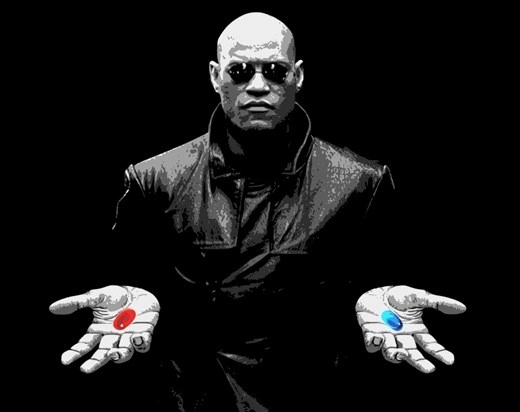
  • In The Matrix, taking the Blue Pill symbolized believing in what one wanted to believe. That is your typical Believer, who accepts everything on the internet as the truth. This person sees satire articles (with headlines like Obama Declares Guns and Jesus Illegal in Texas” or “LeBron James supports Donald Sterling: Wants no Black Fans at Heat games”) and will believe them 100%. With no thought of fact-checking, he forwards the articles to everyone, getting them riled up and ready for war. Soon, everyone is forwarding these articles, all because one person was too lazy to read the fine print. And that article will circulate and spread bad info for the next hundred years.
  • Likes: To appear knowledgeable. To be the first one to spark heated emotions.
  • Dislikes: Feeling dumb after seeing proof that they fell for an obviously fake article.


THE NARCISSIST

Luv me

  • These self-lovers take selfies every five minutes. Their photo albums are made up of hundreds of pictures. Correction: hundreds of the same pictures. With the same poses. In the same places. Would it hurt for them to change one up once in a while?
  • Some of the biggest offenders are men who constantly post shirtless photos of themselves. And what’s up with these guys who send unsolicited pics of their privates to ladies? Do they think a woman has never seen one before?
  • Likes: Plenty of ‘likes’ and compliments.
  • Dislikes: Receiving no ‘likes’ or comments.


THE CATFISHER

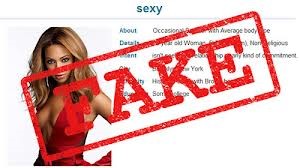
  • These people create fake profiles and ask you to friend them. They want to troll you or get you to send money. These profiles always show a gorgeous woman who writes in poor English with no punctuation, asking for a friend.
  • Who on earth still believes a woman looking like Beyonce or Jessica Alba needs to resort to making random friend requests online to meet guys? Please. They certainly wouldn’t be coming after a regular dude like me. These Catfishers (who are probably dudes anyway) should be thrown in jail. Let them make some new friends there.
  • Likes: Money. Credit card info. Gullible men.
  • Dislikes: Truth and honesty. Facebook administrators. The police.


THE BLUSTERER

  • In the movie Training Day, Denzel’s character (Alonzo Harris) goes ballistic on a group of residents, promising them that they’ll be playing basketball in Pelican Bay prison and screaming ‘King Kong ain’t got @$%!^ on me’. That reminds me of the classic Facebook Blusterer.
  • When Blusterers feel someone has disrespected them, they don’t simply vent. They explode. They post a vague stream of profanities against the offenders, which goes something like this: “To the person who did what you did, you know who you are and you know what you did. Don’t you EVER mess with me! I’m not the one! Test me! I don’t play!”
  • So why are they called ‘Blusterers’? Because it’s mostly hot air. They never actually name or tag the offender in the post. Unless he has telepathic powers, there’s no guarantee he’ll even see the post, much less respond to it. Serious people don’t make vague Facebook posts that may never be read. They go to the offender’s house, beat the crap out of him, and then post about it as a warning to others. But a Blusterer makes these vague posts almost every week.
  • Likes: Receiving attention. Creating drama. Feeling tough.
  • Dislikes: Being ignored. Receiving feedback that they may be part of the problem.


THE REPORTER

Reporter

  • If you plan to DVR a popular show like Game of Thrones, 24, or Scandal, then don’t look at your phone when the show is on. At least, not if you don’t want to spoil the surprise when you finally watch it. Why? Because Reporters are the folks who provide real-time, play-by-play developments of the show for the entire hour. Admittedly, I’m one of them. If 24 is on, or my Ravens are in a playoff game, I’m posting about every development or every completed pass (to all my friends, I’m sorry. I will try to do better this season).
  • Likes: To feel like part of the crowd. To be the first one to spread unimportant news. To live vicariously through sports teams.
  • Dislikes: Posting updates too late. Realizing that no one cares.


THE SELF-PROCLAIMED EXPERT

Bad Advice

  • These are those people who create those memes or videos full of seemingly profound nuggets of wisdom—until you actually think about what you’re reading. Some of them have great advice, but many of them are simply unintelligible rants of one person’s opinion. Most of these people have no credentials, but it doesn’t matter. It could be the stupidest advice ever, but if it’s written inside a beautiful meme, it might as well be biblical because people will accept it with no questions. Give someone a cell phone and internet connection, and they’re an expert on nuclear physics or relationships.
  • Actually, I’m just being a hater because they’re smarter than I am. Some of these people have thousands of followers. Me? Uh, not so much. I need to take a page from their book and start filming videos from the driver’s seat of my car so I look credible.
  • Likes: A large number of followers. Mass sharing of messages.
  • Dislikes: Requests to see credentials. Someone calling BS on their posts.


The bottom line is that we all exhibit these behaviors at some point, although some people seem to do so all the time. Nevertheless, I love seeing them. It’s what makes Facebook fun (for me at least).

Any other personalities I missed?

Living BOLDLY and fearlessly (while being smart about it)


I’m honored to have one of my articles published in the June 2014 inaugural issue of BOLD Favor magazine, a publication highlighting people, organizations, and causes that inspire people to live boldly and fearlessly. I’d like to share the article with you, my wonderful readers, in its entirety.


The founder and editor-in-chief of BOLD Favor, Lynita Mitchell-Blackwell, is an impressive young lady who is a published author, CPA, attorney, speaker, and leader in her community. I always tell her that she is going to be another Oprah in a few years, so I plan to stay on her good side so I can borrow—no, have—a few million bucks from her one day. So when she asked me to submit an article related to living boldly, I was very happy to do so.


When I first thought about living boldly, I considered the time I stepped out of my comfort zone to ski on a steep slope (a mountain slope in the Austrian Alps, of all places), even though I had never touched a ski in my life. After two short lessons, I went up to the top of a hill and tried to practice making turns. Instead, I shot downhill like a bullet, straight toward death or serious injury in the form of a massive concrete support column. The other skiers spotted me as an obvious newbie and decided to move out of my path. I heard the ski instructor yelling for me to turn, but my leg wouldn’t listen. As I got within 20 feet of slamming into that column, I shifted my weight so hard that I executed a perfect 90-degree left turn at the last second. I drifted away with a new lease on life and a promise to start going to church more, as my buddy gave me that smirking “you-know-you-almost-killed-yourself-don’t you?” look.


BEFORE: Living boldly and fearlessly on the ski slopes

BEFORE: Ready to live boldly and fearlessly on the ski slopes


How I lived boldly and fearlessly on the ski slopes

AFTER: How living boldly and fearlessly on the ski slope worked out for me


While that was certainly living boldly, it was also a bit stupid to try skiing in that environment, especially one where most people didn’t even speak English and I didn’t know the German words for ‘hospital’ or ‘last will and testament’. I didn’t want to inspire someone to risk his or her life, so I decided to write about safer ways to live boldly.

Enjoy the article and check out the magazine!


Pushing BOLDLY Through Fear & Past Procrastination

Reprinted from June 2014 issue of BOLD Favor magazine

by James Reid

 

Taking a leap of faith

Leaping out of the comfort zone (which is safer than skiing)


To me, living boldly is stepping out of your comfort zone and changing your life. Everything starts with that first step.

Most people never take that step because of fear. Fear of being a failure. Fear of uncertainty. Fear of being ridiculed or of being uncomfortable.

I had those fears when it came to my writing. I love to write. I daydream about being a famous author. And I procrastinated—for years—in writing my first novel. It isn’t good enough yet, I told myself. I never learned how to do this. What if people laugh at me and say my book is garbage? Especially after I spent all these years on it?

If you are thinking like this about your own dream, stop it.

I used to volunteer and spend time talking to elderly people with no family. They appreciated the company. And while the conversations were pleasant, all of them expressed the same regret: they wished they’d taken a chance on doing something they loved. They said they made dozens of excuses for their inaction; they were too busy, kids got in the way, etc. They warned me not to make the same mistake because life sneaks up quickly. The situation and timing for living boldly will never be perfect. The best time is always now.

So for me, the fear of having critics rip my book wasn’t as strong as the fear of getting old and looking back on my life, wishing I had taken a chance to achieve great things. How about you? What do you fear most? Failure? Or regret?

I have a feeling you want to change your life and make that big step! As you live boldly, I’ll share some things I’m learning as I go along in my career:

  • Haters will come. They’re always going to be there, so forget them. I fretted about them until someone reminded me that even the Bible has detractors. So if some people have problems with the best-selling book in history, how can I expect my book to emerge unscathed? You’ll never get everyone to like you. Focus on your supporters instead.


  • Forget about making mistakes. In fact, use corporate puffery and call them learning opportunities. You’ll have plenty of them, especially when starting any venture. Of course, you should try learning from other people’s mistakes rather than your own, but it’s still unavoidable. Just learn from them. I’ve learned more of what not to do than what to do in this early stage of my writing career.


  • Aim high. You’ll need to, because people will always be pulling you back down with them. For example, writers groups can be depressing. We’re constantly told we have a better chance of hitting the lottery than of getting an agent and making money, blah blah blah. Yes, the odds are astronomical. I experience them every day. Living boldly means you will, too. So you need to be a realist.


But don’t confuse realism with pessimism. Pessimism is naysaying, with no thought of positive outcomes or solutions. A realist understands the risks and troubles, but plans to overcome them. It’s true that most writers make little money. Yet, James Patterson made $94 million in one year. So somebody is making money by writing. Will I get there? Who knows? Most of us won’t reach that level (if money is your measure of success). But he started at zero like everyone else. Aiming high and believing you can get there is living boldly. It’s difficult, but not impossible.


  • Be patient. I struggle with this myself. But unless you’re lucky, success won’t come fast. However, people expect everything to move quickly these days, so they’ll question you and doubt you, wondering why it hasn’t happened for you yet. Just keep at it. Big things have small beginnings. That first step is the hardest. Once you get going, you start rolling.

It took me ten years to complete and publish my book. People always wonder why I didn’t give up. It never crossed my mind. I love writing stories and I still hold on to that dream.

If you take that bold step to change your life and do what you love, giving up won’t be an option for you, either!
I’ve got 99 problems…and book publicity is one of them

Being a writer is rewarding, exhausting, and sobering. Particularly if you’ve recently published your first book and are trying to make a name for yourself. That means you get to experience the wonderful world of book promotion. You get to try a million suggestions (which everyone will have) to find those fleeting moments of joy when you get a positive review or sell a book. You get to learn what works and what doesn’t. And as I go through these growing pains, I’m happy to share the lessons I learn with you.


In my ongoing quest for book publicity, I participated in the 2014 Dallas Book Festival a few days ago and purchased an author booth. It was my first time being an author at a festival, so I was hyped! I had my table set up, my books and marketing materials stacked neatly, and a gatorboard poster of my book cover displayed. I was ready to sell millions of books!


I fell a bit short of that goal. I sold THREE books (and I thank those wonderful readers who bought them). In fact, those three might have qualified as one of the top sellers at that festival. All famous authors had to start somewhere, right? I guess I’m moving in the right direction.

One of the great readers who helped me make enough money to pay for parking

One of the great readers who helped me make enough money to pay for parking


In addition to earning enough to buy three-quarters of a tank of gas, I learned some things that might have me better prepared for my next festival. If you plan to sell books at a festival to create publicity, maybe this will help you as well.


Understand the venue

If you want to meet local readers and support your community, a small festival is great. If you don’t care about all that and just want to sell lots of books, you’ll need a bigger one. The Dallas Festival was small and it wasn’t promoted very well. The author section was on the 2nd floor of a library, away from ground floor traffic, and with space for about ten or twelve tables. Some people on the first floor didn’t even know we were up there. Meanwhile, the bigger festivals can accommodate well over a hundred authors and they have promotional budgets to spread the word. Of course, the registration fees can be several hundred dollars (versus the $40 for Dallas), so you get what you pay for.


Hold reasonable expectations

One author at the Dallas festival had traveled from another country to participate. He didn’t sell one book. So unless you have lots of book-buying friends, you’re a well-known author, or you’ve got one of the big publishing houses advertising you, don’t expect to recoup your expenses for events like these. In fact, don’t even bother wasting time calculating how many sold books you need to offset the cost of traveling, registration fees, shipping books back and forth, etc. You won’t see a return on that money for a long time. Just think of it as building awareness for future books. At least most of it is tax-deductible.


Stand frequently and greet everyone

Don’t sit at your table all day. Stand up for a while. Greet people. This makes you approachable, making it easier to sell your book. On the flip side, you have to learn when to cut off certain people. Practice excusing yourself tactfully, because you’ll run across people who just want to talk all day. You’d think otherwise, considering it’s a book festival, but some attendees will have no intention of buying books. They are there to people-watch and talk. At the Dallas festival, I seemingly attracted people who stood at my table for what seemed like hours, telling me unsolicited details about things like their marriage and sex life. They didn’t seem to catch on that I had no interest, nor did they seem to care that I was trying to greet people behind them–people who looked like they would actually buy a book.


(Public Service Announcement: if you are a reader attending a book festival, don’t monopolize the writer’s time when other people are trying to check out their booths. Especially if you aren’t buying anything! If you want to chat, grab their contact information and email or call them later. Or simply step aside while they introduce themselves to another guest, and continue the conversation when the coast is clear.)


All in all, the festival was a great learning experience. I had fun meeting other authors and swapping stories about our experiences and the strange people we met. I still have my 99 problems as I continue this journey, but I’m having fun doing it.


Maybe my 100th problem is that I’m crazy enough to keep doing this mess.